
SmartQuoteInsure.com is a free comparison service, not an insurance company, and may be compensated by partners. Coverage varies by policy and state.
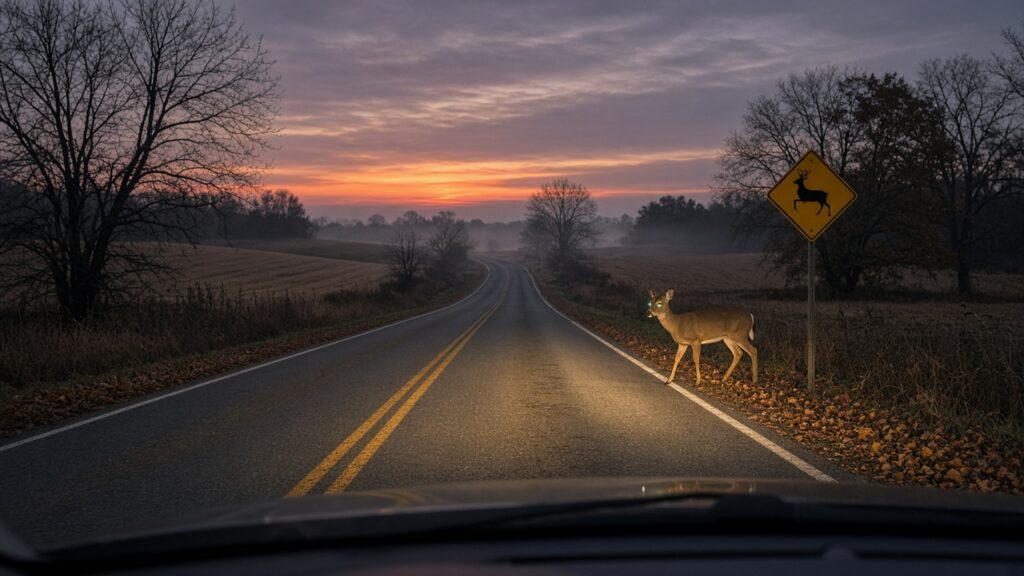
It’s 5:20 p.m. on the Saturday before Thanksgiving, and the light is already going gray. Erin has two hours left on a two-lane road through Pennsylvania farm country, a pie on the passenger seat and her kids asleep in the back. Then two green eyes flash in the headlights, low and to the right, and a doe steps onto the road. Every nerve in Erin’s body says the same thing: yank the wheel. (Erin is made up. That split second is very real.)
🦌 Before the holiday drive
If a deer stepped out tonight, which part of your policy would answer?
Know what you carry before the long drive, and compare auto quotes from multiple insurers side by side.
Free · A few quick questions · No obligation to buy
What she does next decides two things: how safe her family is, and which part of her insurance gets the bill. Plenty of drivers never think about the second part, which is why it’s worth pausing before the holiday drive to look at your auto coverage and compare quotes. Because the instinct to swerve is exactly the one the experts tell you to ignore.
Why November is the riskiest month
Erin is driving straight into peak season. State Farm’s annual analysis says the months drivers are most likely to hit a large animal are, in order, November, October and December, and it estimates more than 1.6 million animal-collision insurance claims in the U.S. between July 1, 2025 and June 30, 2026. The average U.S. driver’s odds of an animal collision are 1 in 145. In Pennsylvania, where Erin is driving, State Farm puts them at 1 in 64.
The Highway Loss Data Institute found the same pattern in claims from 2006 to 2018: animal-strike claims in November were more than twice the yearly average, as mating and hunting season keep deer moving. And timing matters. State Farm notes deer are most active at dusk and dawn, exactly when Erin’s headlights are doing most of the work.
Brake, don’t swerve
Consumer Reports puts it in three words: “Brake, don’t swerve.” Swerving can put you at risk of hitting another vehicle or losing control, and it can confuse the animal about which way to run. Iowa’s Insurance Division gives the same advice, warning that swerving “may cause more damage or injury, and involve other vehicles.” The Insurance Institute for Highway Safety notes that many fatal animal crashes involve secondary impacts that are more severe, such as colliding with another vehicle or a tree.
So Erin does the hard thing. She grips the wheel, stays in her lane, and brakes hard. The doe doesn’t make it across. There’s a thud, a cracked headlight, a crumpled corner of the hood. Everyone in the car is fine.
🚦 Comprehensive vs. collision
Brake or swerve, two different claims. Do you carry both?
A deer strike and a swerve into the ditch usually land under different coverages. See what other insurers would quote for the coverage you want.
Free · A few quick questions · No obligation to buy
The coverage twist
Here’s the part that surprises people. Hitting the deer usually isn’t a “collision” claim at all. State Farm says damage from auto-deer crashes is typically covered under comprehensive, not collision. But if you swerve, miss the deer, and hit another car or an object, State Farm says that will likely be considered a collision loss. Iowa’s Insurance Division describes the split the same way: comprehensive covers damage from events other than a collision, such as animal strikes, while collision covers hitting another vehicle or object.
That’s the irony in the headline. Swerving can turn a deer strike into a crash with a guardrail, a ditch or an oncoming car, which can mean more damage or injury, and is usually handled under a different coverage, with whatever deductible and rules that coverage carries. And Iowa’s Insurance Division notes that with only liability coverage, an animal strike would not be covered. Policies differ, so check yours. Whether a claim affects future premiums is, in State Farm’s word, “maybe.” It depends on your policy, your state and what happened.
Right after the thud
Erin pulls onto the shoulder and flips on her hazards, as State Farm advises, and keeps everyone off the road. She calls the police, since the deer is in the lane. While she waits, she photographs the road, the car and the damage, and she stays away from the animal; State Farm warns a frightened, wounded deer can be dangerous. Before driving on, she checks for leaking fluid, loose parts and a hood that won’t latch. Then she reports the claim to her insurer. Iowa’s Insurance Division adds that a claim makes sense if damages are more than your deductible.
What to do tonight
That night at her parents’ kitchen counter, Erin opens her insurance app to look up her claim number and finds the line she’d never read: Comprehensive, with its own deductible right next to it. Before your own Thanksgiving drive, do what she did: open your policy, find out whether you carry comprehensive and collision, and see what each deductible is. If you don’t like what you find, compare quotes before you go.
✅ Thanksgiving road-trip check
Bags packed. Route set. One more stop.
- ✓ High beams working
- ✓ “Brake, don’t swerve” memorized
- ✓ Comprehensive deductible checked
- ☐ Auto quotes compared
Give your auto policy the same once-over as your tires. Compare quotes from multiple insurers before you hit the road.
Free · A few quick questions · No obligation to buy