
SmartQuoteInsure.com is a free comparison service, not an insurance company, and may be compensated by partners. Coverage varies by policy and state.
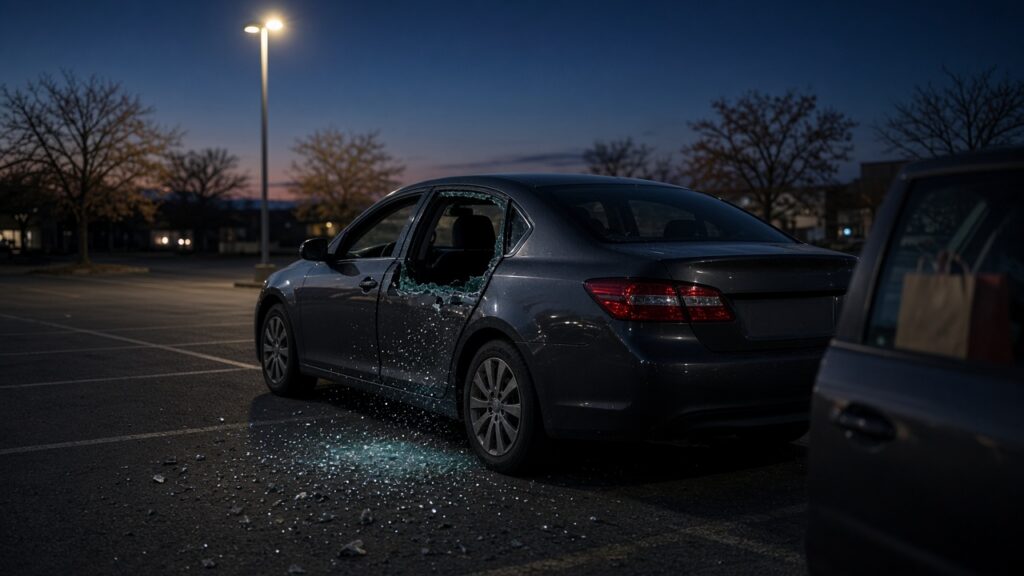
It’s dusk on Black Friday, and Priya has already made two stops. The back seat of her sedan is a small mountain of bags: a new coffee maker, a winter coat for her sister, a boxed tablet she almost talked herself out of. One more store, she thinks, and she leaves the car in the mall lot, locked, and walks away. Twenty minutes later she comes back to a spray of glass on the asphalt, a smashed rear window and an empty back seat. (Priya is made up, an illustrative shopper. The split in her insurance is not.)
🏠 After the mall run
If bags disappeared from your car, would you know which policy to call?
The gifts and the broken window may not land on the same policy. Check your homeowners coverage, and compare home insurance quotes side by side.
Free · A few quick questions · No obligation to buy
The instinct is to call the auto insurer, because it happened to the car. That call may help with the window. It may not help with the gifts. If you own a home, this is a good week to look at the personal property part of your homeowners policy, and to compare home insurance quotes while you’re at it.
The window and the bags are different claims
Start with the car. The Texas Department of Insurance (TDI) says comprehensive coverage, also called “other than collision,” “pays if your car is stolen or damaged by fire, flood, vandalism or something other than a collision.” A smashed window from a break-in generally falls in that category, if you carry comprehensive. You’d typically pay that coverage’s deductible, and policies differ, so check yours.
The bags are a different story. In its auto insurance FAQ, TDI puts it plainly: if someone steals things out of your car, “Your auto policy won’t. But your homeowners or renters policy might pay if you have one of those policies.” TDI’s auto guide also notes that most policies don’t cover equipment that isn’t permanently installed in the car. The gifts on Priya’s back seat were never part of the car.
Where homeowners insurance comes in
The Insurance Information Institute (Triple-I) says personal belongings such as clothes, sports equipment and other personal items “are covered if they are stolen or destroyed by fire, hurricane or other insured disasters.” That coverage, Triple-I adds, “includes items stored off premises—this means you are covered anywhere in the world.” The National Association of Insurance Commissioners (NAIC) describes it the same way: personal property coverage reimburses you for possessions “damaged or lost even when they aren’t on your property.”
There are limits, and they matter on a day like this. Triple-I notes that some companies cap off-premises coverage at 10 percent of the insurance you have for your possessions, and that expensive items such as jewelry usually have their own dollar limits if they’re stolen. The NAIC says a deductible “applies to coverage for your home and personal property and is paid on each claim.” In other words, the claim for the gifts, if your policy responds, would typically run through your homeowners deductible, not the one on your auto policy.
📦 The haul vs. the window
Your homeowners policy may help with what was inside the car.
Personal property coverage is usually on your home policy, not your auto policy, and it has its own deductible. See how home insurers compare for the house you own or the one you’re buying.
Free · A few quick questions · No obligation to buy
If you rent
You don’t have to own a house for this split to apply. Triple-I says most renters policies include coverage for belongings away from home, and that, for example, “property stolen from your car would be covered,” though there are generally dollar limits on what you can be reimbursed. If you rent, the policy to check is your renters policy. This article is about homeowners coverage; the comparison links here are for home insurance quotes, not renters quotes.
Do this tonight
Priya can’t undo the walk across the lot. You can still change what happens on your next stop.
Keep receipts and photos of the bigger purchases; the NAIC suggests a household inventory with pictures, and Triple-I says a home inventory is the best way to tell whether your personal property limit is enough. Before you leave one store for the next, put the bags in the trunk, and do it before you arrive at the next lot, not after you park. The National Insurance Crime Bureau (NICB) warns that thieves are known to watch shoppers who stash packages in the trunk and then walk into a store. And open your homeowners policy tonight: find the personal property limit, any off-premises cap and the deductible that would apply to a theft claim.
Policies and states vary, so the only answer that counts is the one in your policy. Priya called the police from the lot, then opened both policies when she got home. The window and the gifts were never going to be the same claim.
✅ Before you hit the lot
Bags planned. Receipts saved. One more check.
- ✓ Receipts and photos of big purchases kept
- ✓ Bags go in the trunk before you arrive
- ✓ Personal property limit and deductible checked
- ☐ Home quotes compared
Policies and states vary. If you’re not sure what your homeowners policy would do with a loss like this, compare home insurance quotes before you shop.
Free · A few quick questions · No obligation to buy